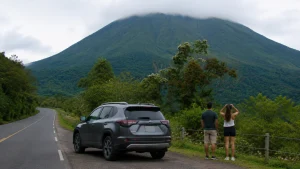
Costa Rica rewards travelers who like freedom. Volcanoes, cloud forests, surf towns, wildlife reserves and quiet beaches can all fit into one trip, but many of the country’s best experiences are spread across different regions. That is why choosing to rent a car in Costa Rica can transform a vacation from a fixed itinerary into a flexible road trip.
For U.S. and Canadian travelers, the questions usually come before the keys: Do you need a 4×4? What insurance is required? Is it better to pick up near San José or Liberia? Can you drive with your home-country license? This guide answers those questions directly, with practical advice grounded in current information from Costa Rica’s official tourism authority and AmiGO Rent a Car.
Why Rent a Car in Costa Rica?
For travelers combining several regions, renting a vehicle gives you control over departure times, stops and route changes. Costa Rica is compact on a map, but mountains, rural roads, bridges, weather and local traffic can make travel times longer than distance alone suggests.
A car is especially useful when an itinerary includes two or more areas such as San José, La Fortuna/Arenal, Monteverde, Guanacaste, the Central Pacific or the Caribbean. It also opens up accommodation options outside busy town centers, where many lodges and vacation rentals are located.
Costa Rica’s official tourism authority says renting a car is particularly useful for travelers who want to explore beyond major towns, including beaches, jungles and national parks. It also confirms that driving is on the right side of the road, as in the United States and Canada.
Can U.S. and Canadian Travelers Drive in Costa Rica?
Yes. Costa Rica’s official tourism information states that an international driver’s license is not normally required; a valid license from your home country is generally sufficient for tourist driving. Travelers should still verify current entry status, license validity and the rental company’s documentation requirements before departure.
Which Rental Car Is Best for Your Costa Rica Itinerary?
The best rental car in Costa Rica is not necessarily the largest vehicle. Your route, number of passengers, luggage, season and final hotel-access roads should determine the category.
A compact or sedan can be practical for mostly paved routes and city travel. A crossover or SUV adds ground clearance and luggage flexibility. A 4×4 becomes more valuable when the itinerary includes unpaved access roads, mountain areas, remote beaches, rural lodges or routes where road conditions can change quickly.
AmiGO’s current online fleet includes compact vehicles, sedans, crossovers and 4×4/SUV categories. Exact models and availability vary by travel dates, so the vehicle category should be confirmed during booking.
| Typical itinerary / travel style | Suggested vehicle type | 4×4? | Why |
|---|---|---|---|
| San José + Central Valley + major paved routes | Compact / sedan / crossover | Usually no | Efficient for established paved roads and urban driving. |
| Arenal / La Fortuna + Guanacaste resorts | Crossover / SUV | Route-dependent | Extra clearance and luggage space can improve comfort. |
| Monteverde or rural mountain lodging | SUV / 4×4 | Often useful | Final access roads may be steep, gravel or uneven. |
| Remote beaches / rural Nicoya access | SUV / 4×4 | Often recommended | Road surfaces and seasonal conditions can vary. |
| Family or group with large luggage | Larger SUV / multi-passenger vehicle | Route-dependent | Capacity should be based on luggage as well as seat count. |
Do I Need a 4×4 in Costa Rica?
No, not for every trip. Travelers staying mainly on established paved routes may be comfortable in a standard vehicle. A 4×4 is more useful for remote or mountainous areas. Costa Rica’s tourism authority specifically notes that terrain becomes more adventurous in some regions and recommends choosing a vehicle with the destination in mind.
One of the most useful pre-trip checks is the final access road to each hotel or vacation rental. A property can be close to a major highway and still have several kilometers of gravel, steep grades or uneven road before arrival.
Costa Rica Car Rental Insurance: What Should You Know?
Insurance is one of the most important parts of comparing a Costa Rica car rental quote. The lowest headline rate is not always the final trip cost, so travelers should review required coverage, optional protection, deductibles and the security deposit before confirming.
Costa Rica’s official tourism information states that basic rental-car insurance is mandatory and advises travelers to read the rental contract carefully, understand what is covered and ask for details about insurance policies.
AmiGO publishes its current coverage options, exclusions and guarantee-deposit conditions in its Terms & Conditions. Those terms state that the guarantee deposit depends on the vehicle category and coverage option selected. They also explain that coverages purchased through third-party websites or sources are not accepted by AmiGO.
If you plan to rely on a credit-card rental benefit, contact the card issuer before traveling and request written details covering Costa Rica, eligible vehicle categories, rental duration, exclusions and claim procedures. A credit-card benefit should be treated as a separate layer of protection, not as an assumption that local rental requirements disappear.
How Should You Compare Two Rental Quotes?
Compare the complete trip exposure, not only the advertised daily rate. Before booking, line up these items side by side:
- Base vehicle rate and taxes.
- Required coverage included or excluded.
- Optional protection-package cost.
- Deductible or renter financial responsibility.
- Security deposit or card authorization.
- Coverage exclusions and accident-reporting requirements.
- Extra-driver, child-seat, Wi-Fi, GPS or other optional fees.
A quote that appears cheaper at first can become more expensive once mandatory coverage or a larger financial exposure is understood. Ask for the total rental cost and the applicable deposit for your exact vehicle category before arrival.
Where Should You Pick Up: San José, Liberia or the Coast?
Most North American travelers enter through the San José metropolitan area or Guanacaste, but the best pickup location depends on your flight and first destination.
AmiGO currently lists rental locations serving the San José area, Liberia Airport, Tamarindo, Guápiles and central San José. Current opening hours and pickup procedures should be checked for the specific travel date.
- San José / SJO area: practical for the Central Valley, Arenal, Caribbean routes and the Central or South Pacific.
- Liberia / Guanacaste: convenient for northern Guanacaste beaches and many Pacific itineraries.
- Tamarindo: useful if you begin with a beach stay and want a car later in the trip.
- Guápiles: strategically located for Caribbean-side itineraries and northern Caribbean connections.
Driving in Costa Rica: Practical Tips for First-Time Visitors
Driving in Costa Rica is part of the adventure, but first-time visitors should build more flexibility into the schedule than they might for a highway trip in the United States or Canada. Distance is only one factor; weather, road works, mountain terrain and town traffic can all affect travel time.
Costa Rica’s tourism authority recommends using GPS or a navigation app (Waze), considering terrain when choosing a vehicle, keeping valuables out of sight and calling the rental company or 9-1-1 for help rather than accepting unsolicited roadside assistance.
- Use a live navigation app and download an offline map before leaving reliable Wi-Fi.
- Plan longer transfers during daylight when possible, especially on unfamiliar mountain or rural roads.
- Ask each hotel for the recommended final access route and whether a 4×4 is advisable.
- Use secure parking and keep passports, electronics, cameras and luggage out of sight.
- Allow extra time during heavy rain, road construction, holiday periods and around popular beach towns.
- Choose luggage capacity as carefully as passenger capacity; four adults with full-size suitcases may need a larger vehicle than the seat count suggests.
Why Local Expertise Matters
A rental company is more than a place to collect keys when you are navigating another country. Local knowledge can help travelers select a more appropriate vehicle, understand realistic driving conditions and prepare for the route ahead.
AmiGO Rent a Car is a family-owned Costa Rican business with more than 36 years of experience. That local background aligns naturally with what international travelers need most: practical guidance, a range of vehicle categories, accessible pick-up locations, and a team familiar with the country’s geography. The company also received a 2025 Excellent Service Award from DiscoverCars.com.
Quick Answers: Renting a Car in Costa Rica
Is it worth renting a car in Costa Rica?
For travelers visiting multiple regions or staying outside major town centers, yes. A rental car can provide more scheduling flexibility and easier access to beaches, parks, lodges and rural destinations.
Do I need a 4×4 in Costa Rica?
Not always. A standard vehicle can work for established paved routes, while a 4×4 is more useful for mountainous, remote or unpaved access roads. Check the final road to each hotel before choosing.
Is car rental insurance mandatory in Costa Rica?
Yes. Costa Rica’s official tourism authority states that basic rental-car insurance is mandatory. Review what is included, the deductible and the deposit before comparing final prices.
Can I drive in Costa Rica with a U.S. or Canadian license?
Costa Rica’s official tourism information says a valid home-country driver’s license is generally sufficient for tourists and an international driving permit is not normally required. Verify current requirements before travel.
Should I rent near San José or Liberia Airport?
Choose based on your first destination. San José is convenient for the Central Valley, Arenal and many Caribbean or Pacific routes; Liberia is often more efficient for northern Guanacaste beach itineraries.
What is the best navigation app for Costa Rica?
Use a live navigation app like Waze and keep an offline map as backup. Costa Rica’s tourism authority recommends GPS or navigation apps because road conditions and travel times can vary.
What should I compare besides the daily rental rate?
Compare required coverage, optional protection, deductible, security deposit, taxes, extra-driver or equipment fees, luggage capacity, location procedures and the total amount you expect to pay or authorize.
Pre-Booking Checklist for U.S. and Canadian Travelers
- Map the complete itinerary before choosing a vehicle category.
- Ask hotels about final-road conditions and 4×4 recommendations.
- Compare total rental cost, required coverage and optional protection.
- Confirm the guarantee deposit for the chosen vehicle and coverage.
- Verify flight arrival time against the selected office or pickup procedure.
- Check passenger and luggage capacity.
- Reserve child seats, Wi-Fi or other extras early when needed.
- Save the rental company and roadside-assistance contacts before departure.
- Review current driving requirements and rental terms shortly before travel.
Choosing to rent a car in Costa Rica gives U.S. and Canadian travelers something especially valuable: control over the journey. The key is planning beyond the daily rate. Match the vehicle to the route, understand the insurance and deposit conditions, select the pickup location that fits your itinerary and allow realistic driving time.
With the right preparation, a Costa Rica car rental becomes more than transportation. It becomes part of the experience—connecting volcanoes, beaches, rainforests, small towns and the spontaneous stops that often become the most memorable moments of the trip.
Ready to build your own Costa Rica road trip? Review current vehicle availability, rental conditions, coverage options and pickup locations directly with AmiGO Rent a Car, then reserve through the official AmiGO website.